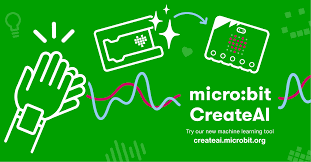
Give students a hands-on introduction to artificial intelligence by turning their movements into training data.
In this project, students teach a computer to recognize human movement. Instead of writing instructions, they train a system to learn from examples using a micro:bit.
Why This Matters for Students
Artificial intelligence can feel abstract to students. When they train a model using their own movements, it becomes real and interactive.
- Students create training data
- Students teach a system to recognize patterns
- Students see how machines learn from examples
This represents a shift from writing code to training intelligent systems.
Classroom Project Idea: Movement Recognition with micro:bit
Grades: 5 to 9
Tools: micro:bit, CreateAI
Project Overview: Students train an AI model to recognize physical movements using accelerometer data.
Materials Needed
- micro:bit
- Computer or tablet
- CreateAI platform
- Optional wearable holder or clip
How It Works
Students collect movement data using the micro:bit and train a model to recognize patterns.
- Jump
- Run or simulate running in place
- Remain still
The AI Process
COLLECT movement data
LABEL each movement
TRAIN the model
TEST the model
Students test their models and refine them by collecting better data or improving labeling.
Challenge Idea
Ask students to improve the accuracy of their model. Can they reduce errors between similar movements such as walking and running?
Turning AI into Action
- Jump triggers a display icon or light
- Still turns the light off
- Run triggers an animation
Students combine sensor data, machine learning, and real-time interaction.
From Code to Product: Adding 3D Design
If this were a real AI device, what would it look like?
Students can explore designs using MakerWorld and search for:
- Wearable micro:bit cases
- Handheld controllers
- Clip-on devices
They can evaluate how the design supports movement detection and usability.
Where This Exists in the Real World
Movement recognition systems are used in fitness trackers, gaming systems, gesture-controlled devices, and health monitoring tools. These systems rely on pattern recognition just like the models students create.
Career Connections
- Machine Learning Engineer builds systems that learn from data
- Data Scientist analyzes and interprets patterns
- Embedded Systems Programmer programs AI on physical devices
- Product Designer designs how AI devices are used in real life
Teaching Tip
You are not just coding. You are training a system to recognize human behavior.
This helps students understand that AI is built by people and depends on data and testing.
Extension Idea
- How could this system be used in real life?
- What new movements could be added?
- How could the model be improved?
Optional extension: Have students design or choose a device enclosure using MakerWorld and sketch improvements.
Closing Thought
When students train a machine to recognize their own movements, artificial intelligence becomes something they can understand, control, and create.
Want the full classroom experience?
We’re currently building the complete lesson package for this project —
including student worksheets, guided instruction, and grading rubrics.
These materials will be available to premium members soon.