
Teaching Strategies
How Students Learn Best Through Coding
Engaging students in hands-on, meaningful coding experiences helps them build confidence, think critically, and connect learning to the real world.
“Tell me and I forget, teach me and I may remember, involve me and I learn.”
What’s the Best Way to Learn?
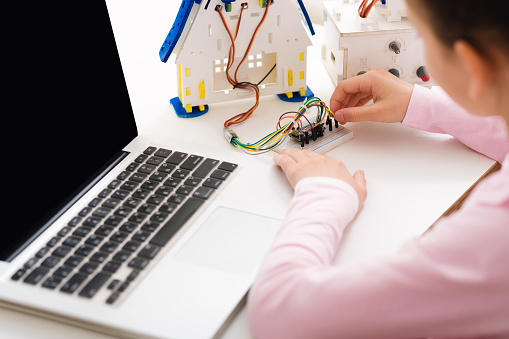
Practice, practice, practice, and more practice. When students learn through engaging, hands-on physical computing experiences, they build the foundational skills needed to thrive in a competitive world.
Once students develop familiarity with tools like microcontrollers, servos, LEDs, breadboards, resistors, and the technical language that goes with them, those skills can be connected to books, content areas, real-world applications, and useful creations.
Core Teaching Strategies
Familiarity is Key

Connect new concepts to what students already know. Familiarity helps students feel more confident and ready to engage with new technical ideas.
Practice Makes Progress

Students learn by doing. Mistakes are part of the process, and each attempt helps build deeper understanding and resilience.
If They Build It, They Will Learn

When students create and build, they move from consumers to producers. That shift makes learning meaningful and memorable.
How to Spark Student Interest
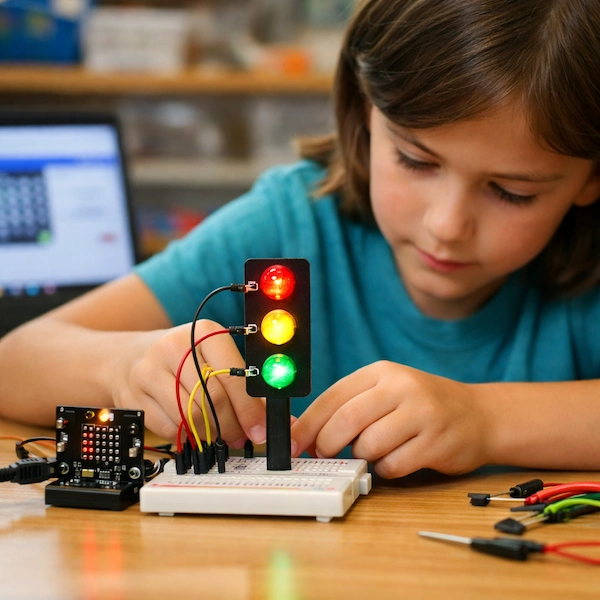
Hands-on projects make learning feel active and worthwhile. Students are more likely to engage when they can see what they are building, test ideas, and make something useful or creative.
Connecting coding and physical computing to familiar books, everyday experiences, and real-world applications helps students understand why the learning matters.