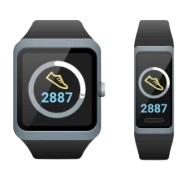
What if your students could build a wearable fitness tracker using code, movement, and a micro:bit?
In this hands-on project, students create a step counter that detects motion and tracks movement, just like real wearable technology.
Why This Matters for Students
Wearable technology is one of the fastest-growing areas in tech, and it is something many students already recognize and understand.
When students build a fitness tracker, they learn that devices do not simply know what is happening. Sensors collect data, and code interprets movement into meaningful information.
This helps students see how coding connects to devices they encounter in everyday life.
Classroom Project Idea: Step Counter with micro:bit
Grades: 5 to 9
Tools: micro:bit, MakeCode
Project Overview: Students create a wearable device that tracks movement using the micro:bit’s accelerometer.
Materials Needed
- micro:bit
- Battery pack or USB connection
- MakeCode
- Optional wristband, clip, or holder for testing wearable designs
How It Works
The micro:bit uses its built-in accelerometer to detect movement. Students program the device to respond to motion and keep track of the total number of steps.
- Detect movement such as a shake or step-like motion
- Increase a counter
- Display the total number of steps
Basic Logic
WHEN shake detected
INCREASE step counter by 1
DISPLAY step counter
This gives students a simple way to see how movement data can be captured, counted, and displayed.
Make It Wearable
Once the counter works, students can think about how the device would be worn in real life.
- Hold the micro:bit while testing
- Attach it to a wrist using a band or clip
- Place it in a pocket and compare results
This moves the project from coding on a screen to designing something physical and usable.
Challenge Idea
Ask students to improve the step counter. Can they make it more accurate? Can they reduce false counts caused by random shaking?
From Code to Product: Adding 3D Design
If this were a real wearable device, what would it look like?
Students can explore device design using MakerWorld and search for:
- micro:bit wristband
- wearable case
- fitness tracker band
They can then evaluate which design makes the device comfortable, secure, and easy to use.
Guiding Questions
- Is the design comfortable to wear?
- Does it keep the micro:bit secure?
- Can you still see the display and press buttons?
- Would this work during exercise?
Even without printing, students begin thinking like product designers.
Where This Exists in the Real World
Wearable fitness trackers count steps, track movement, and provide feedback to users. Devices like smartwatches use sensors and code to turn motion into useful health data.
Career Connections
- Biomedical Engineer designs technology related to health and the human body
- App Developer creates apps that track and display fitness data
- Embedded Systems Programmer writes code that runs on wearable devices
- Product Designer designs wearable devices for comfort and usability
Where AI Fits In
Wearables do not just track movement. They often use AI to interpret it. Students can extend this project using CreateAI by training the micro:bit to recognize different types of movement.
- Walking versus jumping
- Active versus still
They can then use that data to trigger different outputs or categorize activity levels, helping them understand how real devices provide more accurate insights.
Teaching Tip
Your micro:bit is not actually counting steps. It is detecting patterns of movement and interpreting them as steps.
This helps students understand the idea of data interpretation, which is a key concept in real-world technology.
Extension Idea
- How could this device help someone in real life?
- What would make the tracker more useful?
- How could the design be improved?
Optional extension: Have students design or choose a wearable case using MakerWorld and sketch improvements or new features.
Closing Thought
When students build something they could actually wear, coding becomes more than a screen-based activity. It becomes something physical, personal, and real.
Want the full classroom experience?
We’re currently building the complete lesson package for this project —
including student worksheets, guided instruction, and grading rubrics.
These materials will be available to premium members soon.